Private Label Brake Pads: A Strategic Growth Opportunity for Aftermarket Distributors
The global automotive aftermarket is entering a new phase of consolidation. For distributors, importers, fleet service providers, and regional wholesalers, competing solely on price has become increasingly unsustainable. Intensifying competition from cross-border e-commerce, growing pricing transparency, and shrinking margins are rapidly eroding the traditional advantages of pure trading models.
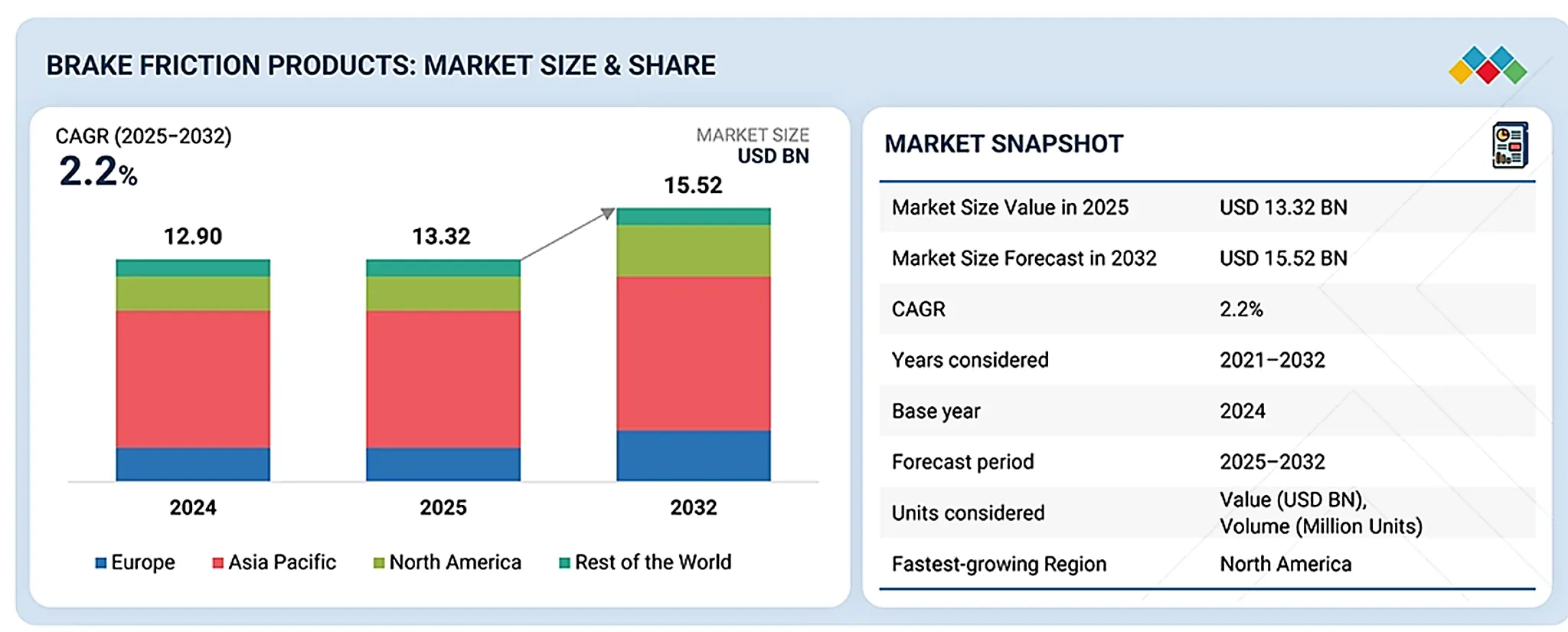
At the same time, vehicle parc expansion, increasing average vehicle age, and stricter safety regulations continue to drive demand for replacement brake components worldwide. According to MarketsandMarkets, the global automotive brake friction products market is projected to grow from USD 13.32 billion in 2025 to USD 15.52 billion by 2032, driven by rising vehicle utilization and growing replacement demand in both passenger and commercial vehicle segments. Brake pads remain the largest product category within the friction products market, creating significant opportunities for distributors seeking sustainable growth.
Against this backdrop, leading aftermarket companies are no longer asking how to source brake pads at the lowest price. Instead, they are asking how to build defensible market positions, improve profitability, and strengthen customer loyalty. Increasingly, the answer lies in private label strategies.
Why Traditional Distribution Models Are Losing Their Competitive Advantage
Historically, many aftermarket distributors relied on reselling established international brands or purchasing generic products from multiple suppliers. While this approach enabled rapid market entry, it also created structural weaknesses that are becoming increasingly difficult to ignore.
Distributors have limited pricing control because identical products are often available through multiple channels. Product differentiation is minimal, making customer relationships highly vulnerable to price competition. Furthermore, dependence on third-party brands reduces negotiating power and exposes distributors to supply chain disruptions, sudden pricing changes, and regional exclusivity restrictions.
The rapid growth of digital procurement platforms has accelerated these challenges. Buyers can now compare prices, specifications, certifications, and suppliers within minutes, reducing the value of traditional distribution networks.
As a result, forward-looking distributors are shifting their focus from transactional sales to brand ownership. Private label programs allow companies to move from selling products they do not control to managing strategic assets they own.
The Business Case for Private Label Brake Pads
Private label brake pads are not simply a packaging exercise. They represent a strategic transformation in how aftermarket businesses create and capture value.
By partnering directly with a qualified private label brake pad supplier, distributors can launch proprietary product lines without investing in production facilities, testing laboratories, or manufacturing equipment. This model enables companies to capture higher margins while maintaining greater control over pricing, channel strategy, customer experience, and long-term brand positioning.
The benefits extend far beyond profitability. Private label programs strengthen customer retention because distributors offer exclusive products that cannot be directly compared across competing channels. They improve negotiating leverage by reducing dependence on third-party brands and enable businesses to tailor friction formulations, packaging designs, and warranty programs according to local market requirements.
For distributors operating in highly competitive regions such as Latin America, the Middle East, Southeast Asia, and Africa, private labeling has become an effective solution for addressing diverse vehicle populations, varying operating conditions, and distinct regulatory requirements.
Market Trends Are Accelerating Private Label Adoption
Several structural shifts are increasing the attractiveness of private label brake pad programs.
According to MarketsandMarkets, the friction materials industry is evolving toward longer service intervals, improved thermal stability, reduced noise and vibration levels, lower brake dust emissions, and environmentally compliant formulations. These trends are reshaping purchasing criteria across the global automotive aftermarket.
At the same time, regulatory changes are accelerating product innovation. The upcoming Euro 7 framework is expected to introduce stricter requirements for non-exhaust emissions, including brake particle emissions. Meanwhile, copper reduction initiatives across North America and Europe are driving the transition toward low-copper and copper-free friction materials.
Vehicle electrification is creating additional opportunities for specialized private label products. Although regenerative braking systems reduce overall brake wear, they also introduce new challenges related to corrosion resistance, noise control, and material compatibility. These changing requirements are increasing demand for application-specific friction technologies.
Generic sourcing models often struggle to adapt to these evolving market conditions. In contrast, private label partnerships with technically capable manufacturers enable distributors to respond faster to market changes and build stronger competitive positions.
Not All Private Label Manufacturers Are Equal
The success of a private label program depends less on branding and more on manufacturing capability.
For procurement teams evaluating potential suppliers, price should only be considered after engineering expertise, process control, testing capabilities, and compliance infrastructure have been thoroughly verified.
Leading manufacturers such as Tuoba distinguish themselves through four critical capabilities: diversified friction formulations, advanced manufacturing technologies, comprehensive testing infrastructure, and internationally recognized quality management systems.
First, they maintain diversified formulation platforms, including ceramic, low-metallic, semi-metallic, and heavy-duty compounds designed for specific vehicle applications and operating environments.
Second, they invest in advanced production technologies such as positive molding systems, automated pressing lines, thermal treatment processes, and precision machining equipment to ensure dimensional consistency and stable friction performance.
Third, they operate comprehensive testing laboratories capable of performing dynamometer testing, shear strength analysis, compressibility testing, fade and recovery evaluations, wear resistance assessments, and SAE J2522 equivalent procedures.
Finally, they maintain robust quality management systems supported by international certifications and end-to-end traceability processes.
Private label success depends on product consistency across every production batch. Inconsistent quality quickly damages distributor credibility, increases warranty costs, and weakens long-term brand value.
Certification Is a Market Access Tool, Not a Marketing Claim
For many distributors, certifications are viewed primarily as sales tools. In reality, they are essential instruments for risk management and market expansion.
Different regions require different compliance frameworks. ECE R90 certification is increasingly expected across Europe, the Middle East, and parts of Latin America. FMVSS standards influence purchasing decisions in North America, while IATF 16949 remains the benchmark for automotive quality management systems worldwide.
These certifications help distributors reduce product liability risks, simplify customs clearance processes, and improve customer confidence.
As regulatory scrutiny increases, buyers are placing greater emphasis on technical documentation, testing reports, and manufacturing transparency. Distributors that align their private label programs with internationally recognized standards are better positioned to secure long-term partnerships with fleet operators, service chains, and institutional buyers.
Building a Resilient Private Label Supply Chain
Launching a successful private label program requires more than selecting a supplier. It requires building an integrated supply framework capable of supporting long-term business growth.
Choosing an experienced private label brake pad supplier with strong engineering capabilities, stable raw material sourcing, and scalable production capacity is essential for maintaining product consistency and supply chain resilience.
Procurement teams should evaluate suppliers based on production capacity, raw material sourcing stability, inventory management capabilities, lead times, engineering support, and responsiveness to market fluctuations.
Minimum order quantities should be viewed within the context of supply chain efficiency rather than as purchasing barriers. Manufacturers establish production thresholds to optimize equipment utilization, maintain process consistency, and reduce operational waste.
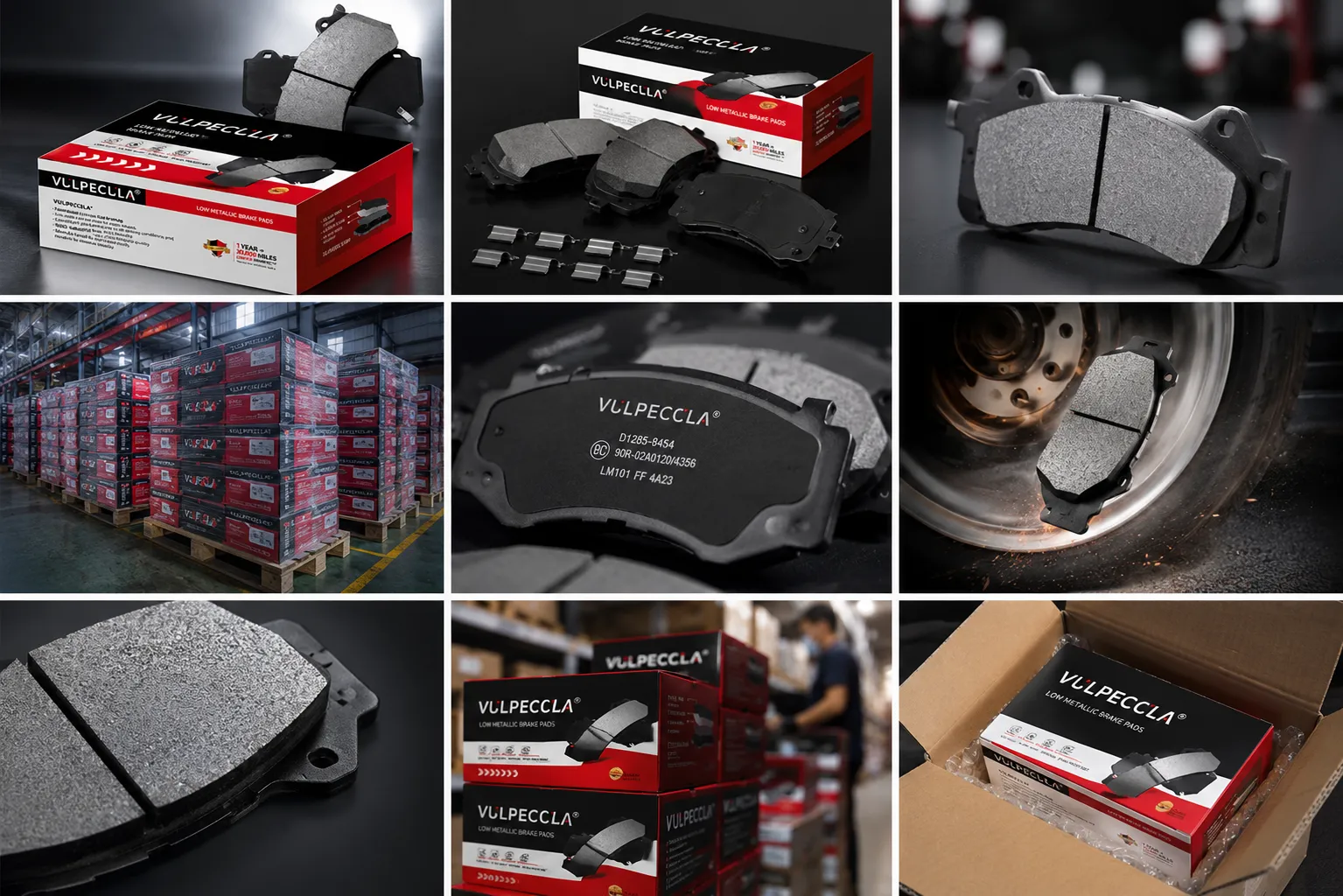
Packaging strategy also plays a critical role. Successful private label programs incorporate durable transport packaging, localized branding, anti-counterfeiting features, and clear technical communication.
Surface protection technologies such as electrostatic powder coating and zinc-based treatments are equally important for maintaining product integrity during long-distance shipping and extended storage cycles.
For distributors expanding into emerging markets, supply chain resilience often becomes a stronger competitive advantage than product pricing alone.
Private Label Is a Long-Term Asset, Not a Short-Term Opportunity
The most successful aftermarket companies do not view private label brake pads as low-cost alternatives to established brands. They treat them as long-term strategic assets.
By controlling product specifications, pricing structures, customer experience, and channel distribution, distributors can create sustainable competitive advantages that are difficult for competitors to replicate.
As the brake friction products market continues to expand and technical requirements become increasingly complex, businesses that rely exclusively on generic sourcing models will face growing margin pressure and reduced market influence.
Companies that invest in certified manufacturing partnerships, application-specific friction technologies, and differentiated brand strategies will be better positioned to capture long-term growth opportunities.
In the next decade, the most valuable players in the automotive aftermarket will not necessarily be those that manufacture brake pads. They will be the companies that own customer relationships, control brand value, and build resilient supply ecosystems around high-performance private label products.
Manufacturers such as Tuoba support distributors through private label development, custom friction formulations, regulatory compliance, and scalable production solutions tailored to regional market requirements. For distributors seeking long-term growth beyond price competition, building a private label strategy is no longer an option—it is a strategic imperative.