
Why Silicon Carbide Plates and Boron Nitride Rods Are Important in High Heat Industrial Applications
Warning: Object of class WP_Post could not be converted to int in /home/u709045765/domains/auto-alley.com/public_html/wp-content/plugins/poststreamline/poststreamline.php on line 711
Warning: Object of class WP_Post could not be converted to int in /home/u709045765/domains/auto-alley.com/public_html/wp-content/plugins/poststreamline/poststreamline.php on line 711
Warning: Object of class WP_Post could not be converted to int in /home/u709045765/domains/auto-alley.com/public_html/wp-content/plugins/poststreamline/poststreamline.php on line 711
Warning: Object of class WP_Post could not be converted to int in /home/u709045765/domains/auto-alley.com/public_html/wp-content/plugins/poststreamline/poststreamline.php on line 711
Warning: Object of class WP_Post could not be converted to int in /home/u709045765/domains/auto-alley.com/public_html/wp-content/plugins/poststreamline/poststreamline.php on line 711
Warning: Attempt to read property "post_excerpt" on null in /home/u709045765/domains/auto-alley.com/public_html/wp-content/themes/covernews/inc/hooks/blocks/block-post-header.php on line 43
Industries that operate under extreme temperatures depend on materials capable of maintaining stability under continuous thermal stress. In manufacturing environments where heat exposure is constant, ordinary materials often crack, deform, or lose efficiency over time. This is why advanced ceramic materials have become essential across modern industrial systems.
Among the most trusted materials used in high-temperature environments are silicon carbide plate products and boron nitride rod components. Although both materials belong to the advanced ceramics category, they offer different performance advantages that make them valuable for specialized industrial applications.
The Growing Importance of Advanced Ceramics
Traditional industrial materials often struggle in systems exposed to extreme heat, chemical corrosion, and rapid temperature changes. Advanced ceramics are engineered to overcome these limitations by offering superior thermal and mechanical performance.
Silicon carbide and boron nitride are widely selected because they provide:
-
Excellent heat resistance
-
Strong dimensional stability
-
Corrosion resistance
-
Long operational life
-
High durability under thermal stress
These properties make them suitable for industries where continuous heat exposure is unavoidable.
Why Silicon Carbide Plates Are Widely Used
Silicon carbide plates are known for their exceptional hardness and thermal conductivity. These plates are commonly used in industrial systems where heat transfer, wear resistance, and structural stability are critical.
One major advantage of silicon carbide is its ability to perform under extremely high temperatures without losing strength. The material also handles thermal shock effectively, which means it can survive rapid heating and cooling cycles better than many conventional ceramics.
Industries use silicon carbide plates in applications such as furnace systems, kiln structures, heat treatment equipment, and thermal processing machinery. Their durability helps reduce maintenance requirements and improves long-term operational efficiency.
Another important benefit is corrosion resistance. Silicon carbide plates can withstand exposure to aggressive chemicals and abrasive materials, making them suitable for harsh industrial environments.
Understanding the Role of Boron Nitride Rods
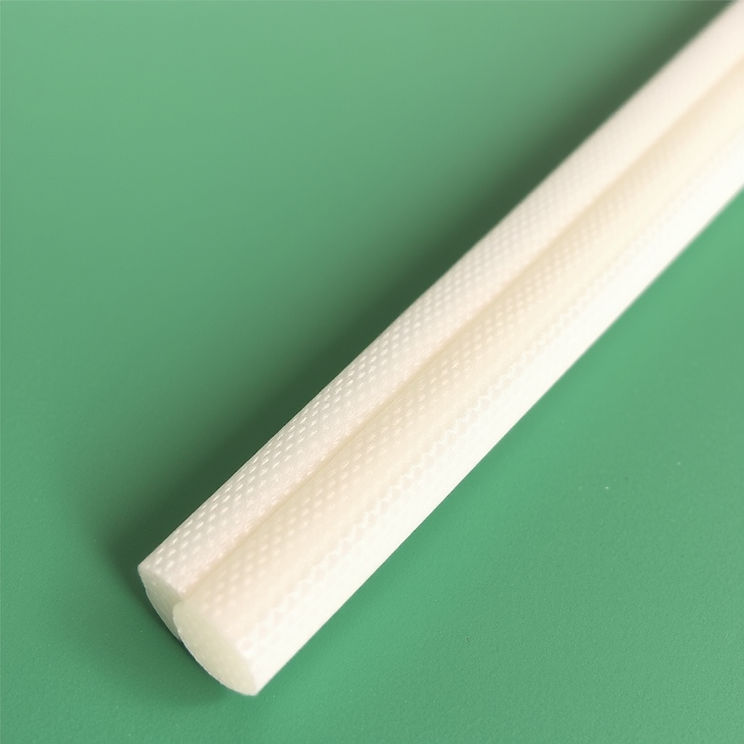
Boron nitride rods are valued for an entirely different set of properties. While silicon carbide focuses heavily on strength and heat transfer, boron nitride is widely appreciated for its thermal insulation and machinability.
Boron nitride rod can maintain stability at very high temperatures while remaining electrically insulating. This combination makes them useful in industries that require controlled heat management and electrical isolation.
Manufacturers commonly use boron nitride rods in semiconductor systems, vacuum furnaces, molten metal handling equipment, and precision thermal applications.
One of the most unique characteristics of boron nitride is its ability to resist molten metals without sticking. This property makes it highly valuable in aluminum processing and high-purity manufacturing environments where contamination control is essential.
Comparing Thermal Performance
Although both materials perform well under heat, their thermal behavior differs significantly.
Silicon carbide plates are preferred when the system requires efficient heat transfer and strong mechanical performance. Their thermal conductivity allows heat to move quickly through the material, which improves thermal efficiency in industrial heating systems.
Boron nitride rods perform better when insulation and controlled thermal management are priorities. They help isolate heat and maintain stable processing conditions in sensitive equipment.
The choice between the two often depends on whether the application requires heat dissipation or heat containment.
Durability and Operational Reliability
Industrial environments place constant pressure on materials through friction, chemical exposure, and temperature cycling. Both silicon carbide and boron nitride offer excellent durability, but they respond differently to mechanical stress.
Silicon carbide is one of the hardest ceramic materials available, making it highly resistant to abrasion and wear. This strength allows silicon carbide plates to survive in heavy-duty industrial operations involving continuous mechanical stress.
Boron nitride rods are softer compared to silicon carbide, but they provide excellent resistance to thermal cracking and chemical attack. Their machinability also allows manufacturers to create precise custom components for specialized applications.
These complementary strengths explain why many industries use both materials within the same thermal processing system.
Conclusion
High-heat industrial systems require materials that can deliver stability, durability, and thermal reliability under demanding conditions. Silicon carbide plates and boron nitride rods both play essential roles across industries such as manufacturing, semiconductor processing, thermal engineering, and metal production.
Their unique properties allow industries to improve operational efficiency while reducing maintenance and performance failures. Companies looking for advanced ceramic materials for high-temperature applications can explore engineered industrial solutions at regmetals.com.